

Description
Type: Studio Pottery
Design: unknown
Craftsman: unknown
Object: holy water font
Material: clay with lead glaze
Dimensions: height: 31 cm, width: 13.8 cm, depth: 7 cm
Shard: light in colour
Surface: yellowish with black and reddish patches
Manufacture period: probably 17th/18th century (see details)
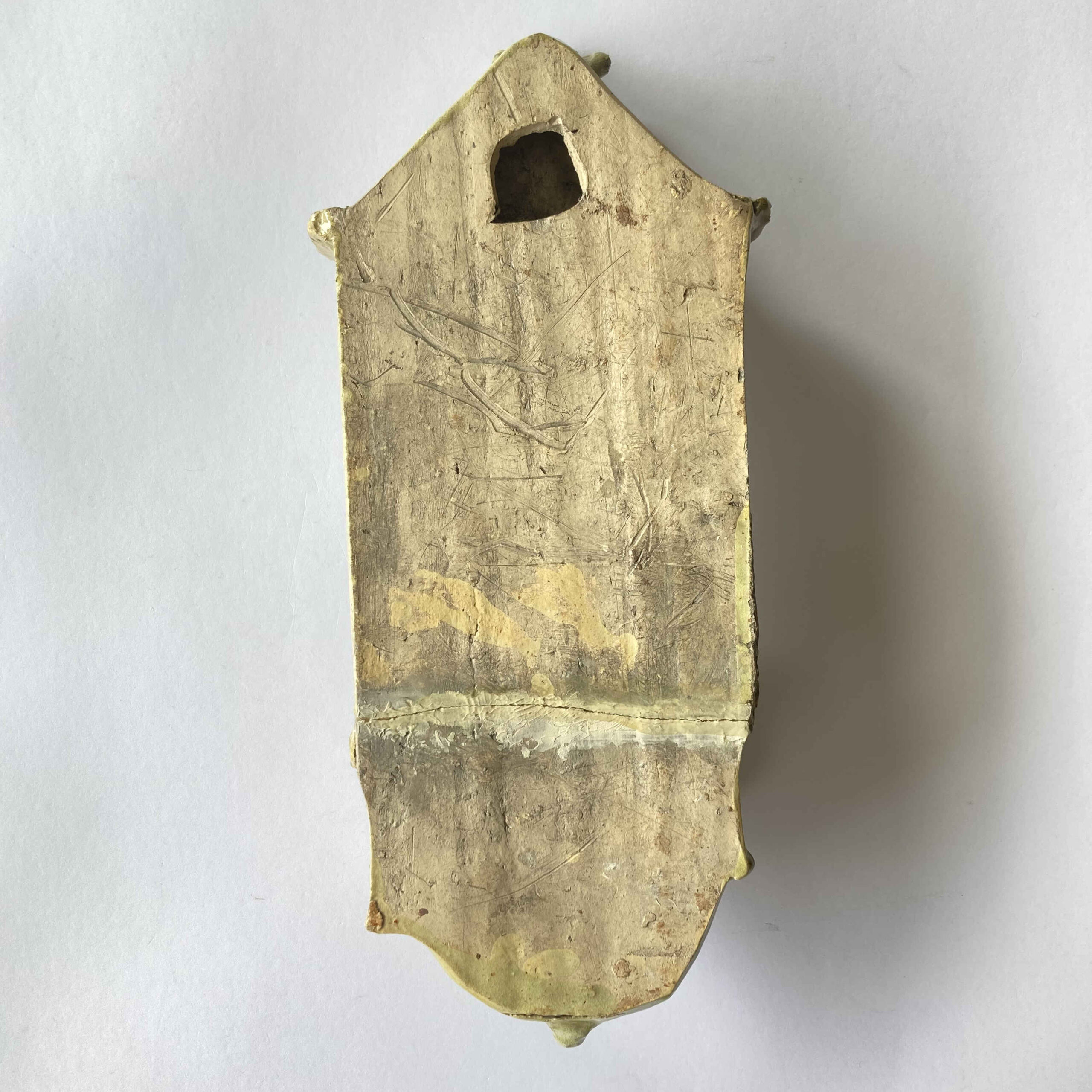
Condition: missing pieces, gaps, damage; glued on the basin
Signature/mark: none
Details:
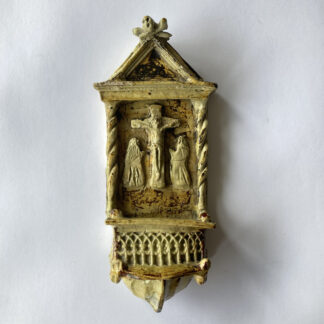
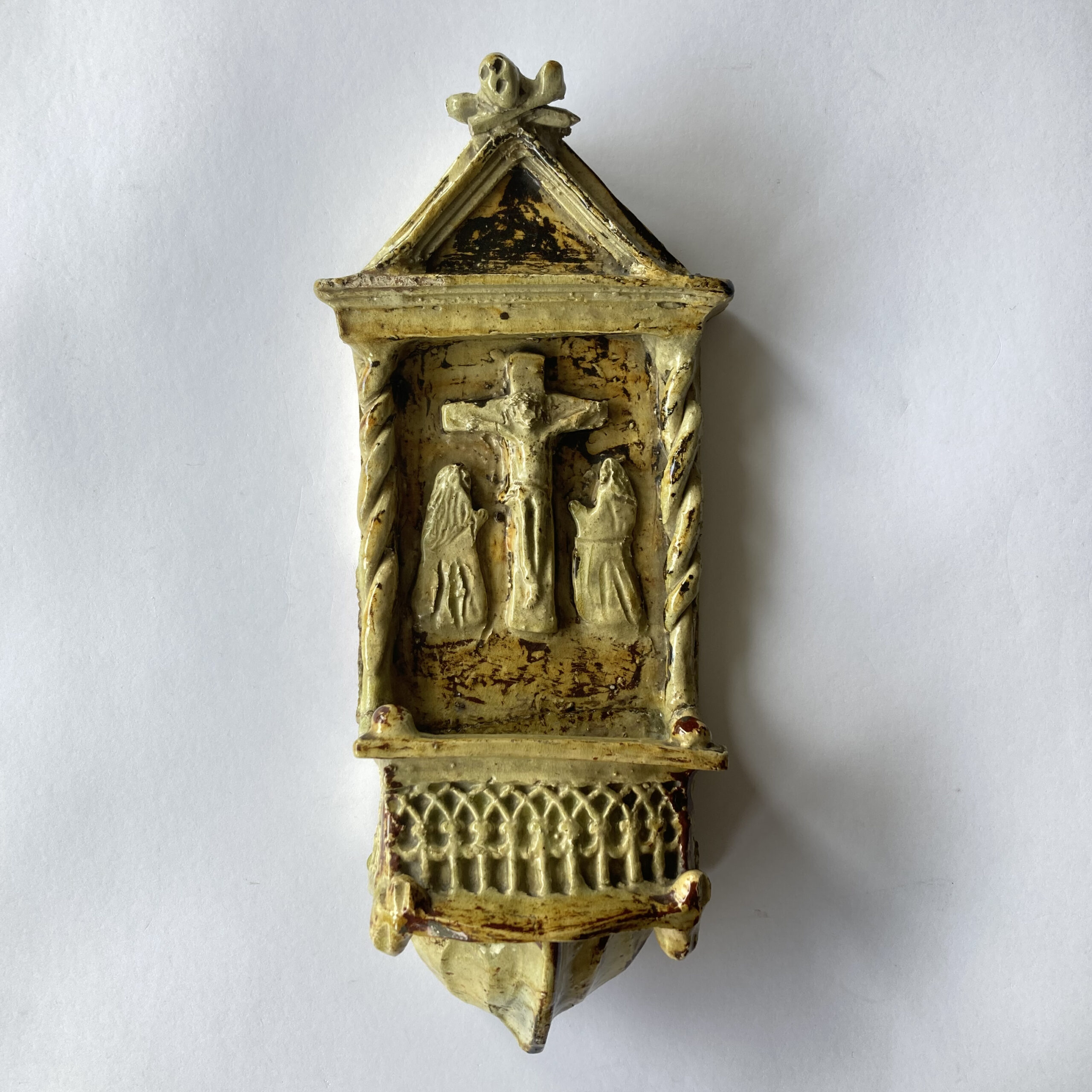
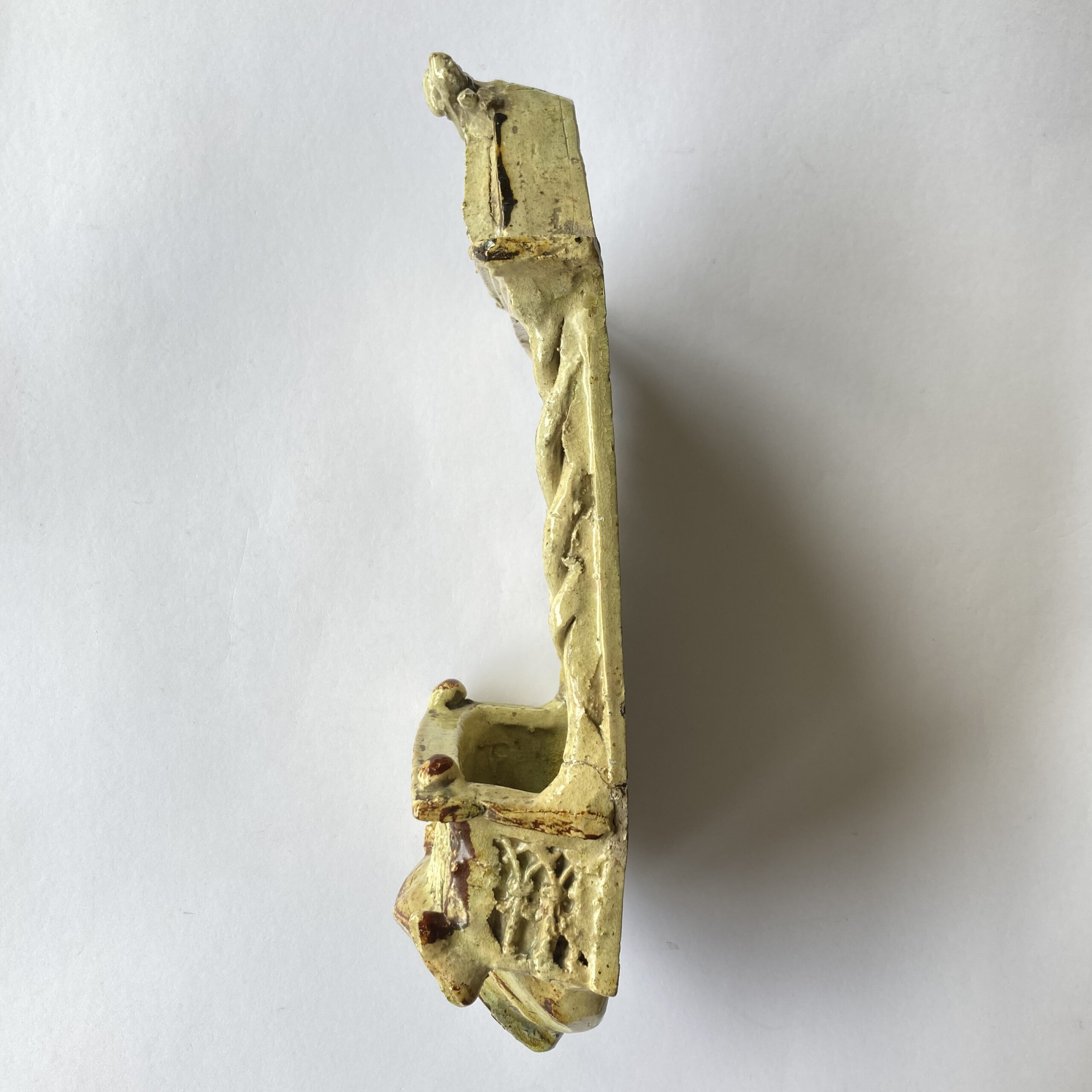
The holy water font combines the form of a Gothic-style pulpit with a balustrade – which serves as a basin to hold the holy water – with a crucifix featuring the crucifixion group, housed within an aedicule with a classical pediment and Solomonic columns typical of the Baroque period. The pediment is crowned at its acroterion by the Golgotha cross or Adam’s cross, a motif that was frequently used during the Baroque and Neoclassical periods.
One can interpret the work vertically from bottom to top, beginning with the balustrade, which almost resembles a loggia and could represent earthly life, then moving on to the aedicule, in which the Passion of Christ is depicted, and finally arriving at the skull, which symbolises human death but is placed at the highest point of the ensemble, which would represent heaven and thus heavenly triumph.
In other words, from an iconographic perspective, this work could have been created in the 17th or 18th century. The use of black and red served to create chiaroscuro contrasts. Black symbolised death and sin, whilst red symbolised the blood of Christ. This colour scheme is characteristic of the typical drama of the Baroque period.
However, despite its complexity, the lack of detail in the human figures is striking, particularly in the faces, which suggests that it was intended for domestic use.
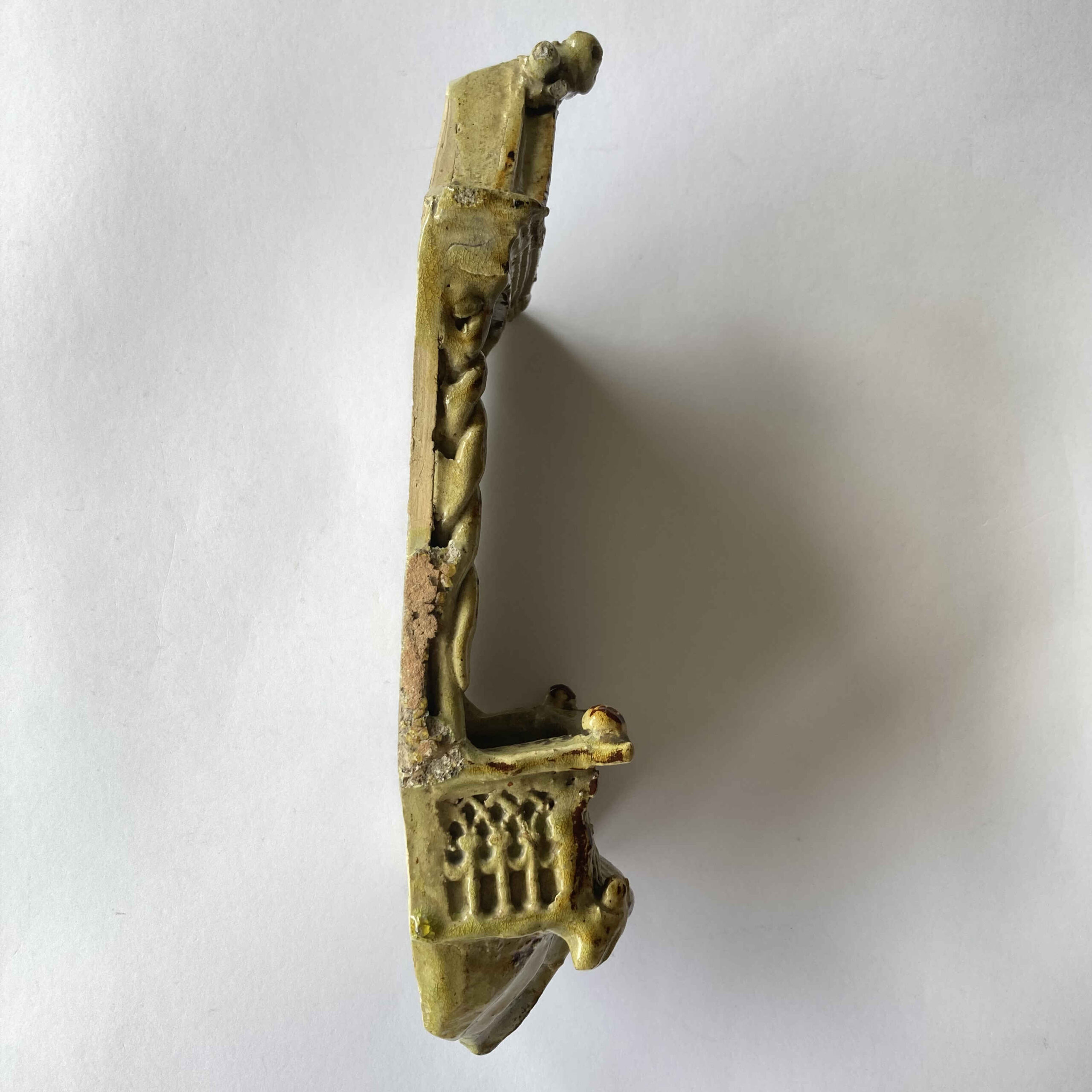
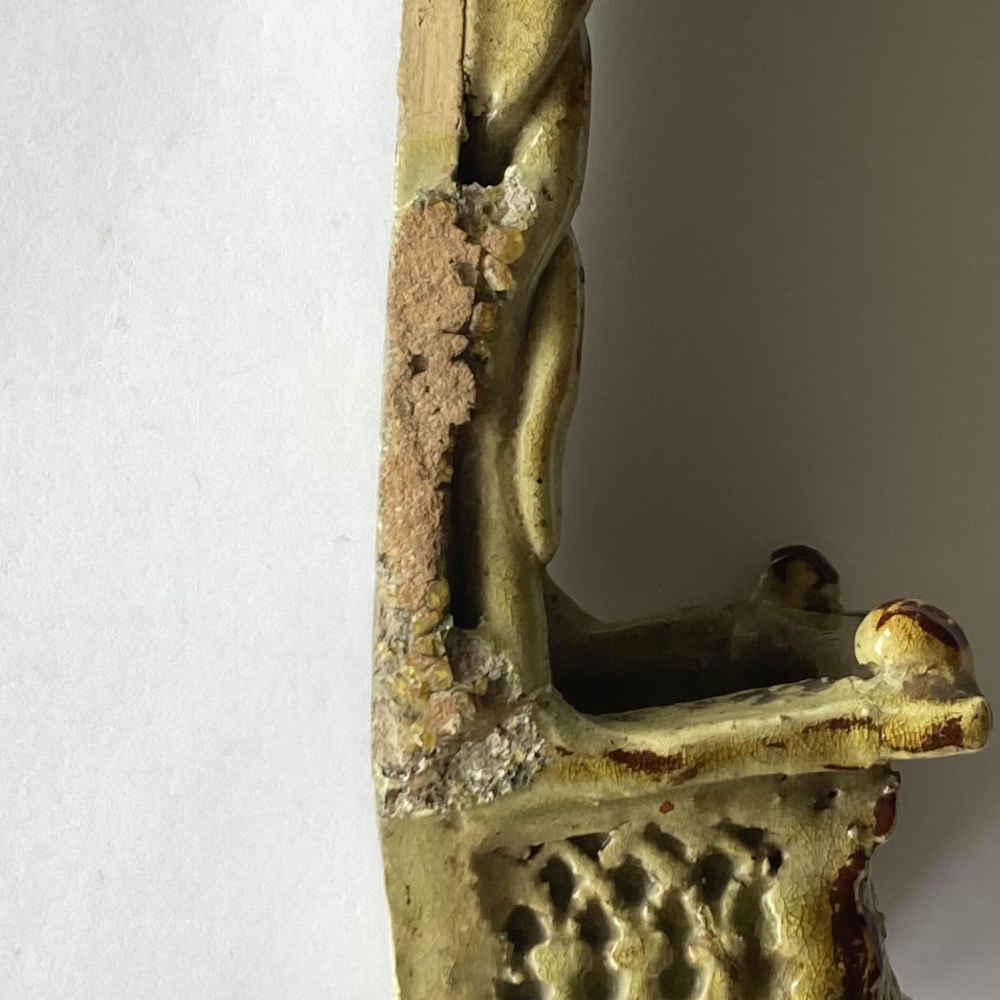
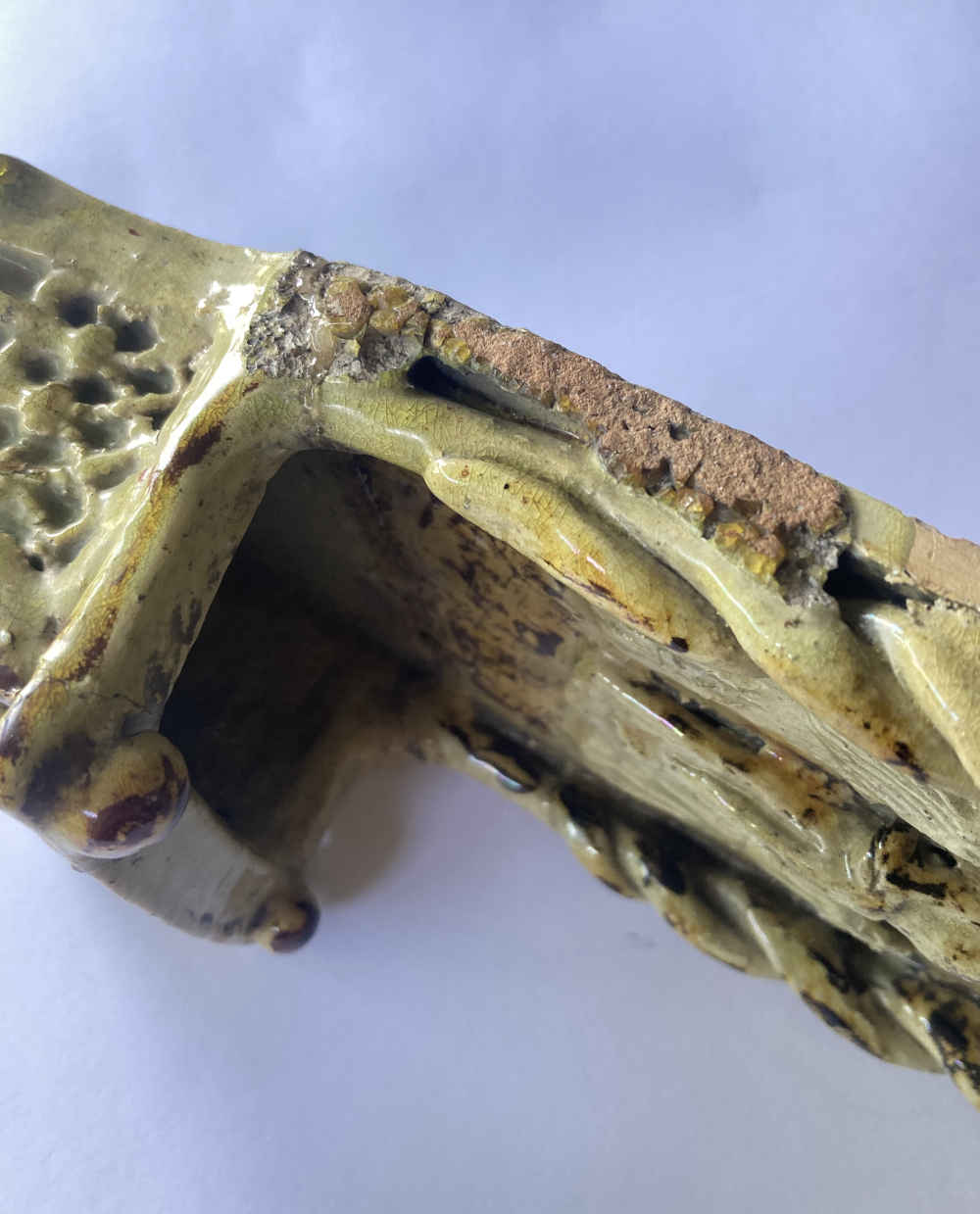
On the right-hand side, traces of a reddish clay can be seen, which appears to cover the glaze and be embedded within it, indicating that this piece was attached to another and that both were glazed together. The holy water font was probably attached either to part of a tiled stove or to a domestic altar. Overall, the front of the piece is glazed with a transparent, partly yellowish glaze, which is very likely a lead glaze.