|
1865
born in Lausanne, Switzerland
1875 – 1882
– Classical studies at the Collège Cantonal
– Drawing lessons with the painter Jean-Samson Guignard
1882
Studies at the Académie Julian with Jules Joseph Lefebvre and Gustave Boulander
1883
Félix Vallotton is admitted to the École des Beaux-Arts, but decides to remain at the Académie Julian
1885
– Begins notebook called ‘Livre de Raison’, in which he records all his paintings, drawings, prints and sculptures and which contains 1700 entries at the end of his life
– – Exhibition of two works at the Paris Salon, including a self-portrait
1889
– Exhibition of several works at the Exposition Universelle in Paris, where he sees works by the Japanese painter Hokusai, who had a great influence on Vallotton, for the first time
– F. Vallotton works as a restorer for the Henri Haro Gallery
1890
– begins writing articles for the Gazette de Lausanne as an art critic, which he continues to do until 1897
– travels through Europe and visits Berlin, Prague and Venice
1891
– Félix Vallotton attends the Salon for the last time and takes part in the more avant-garde Salon des Indépendants
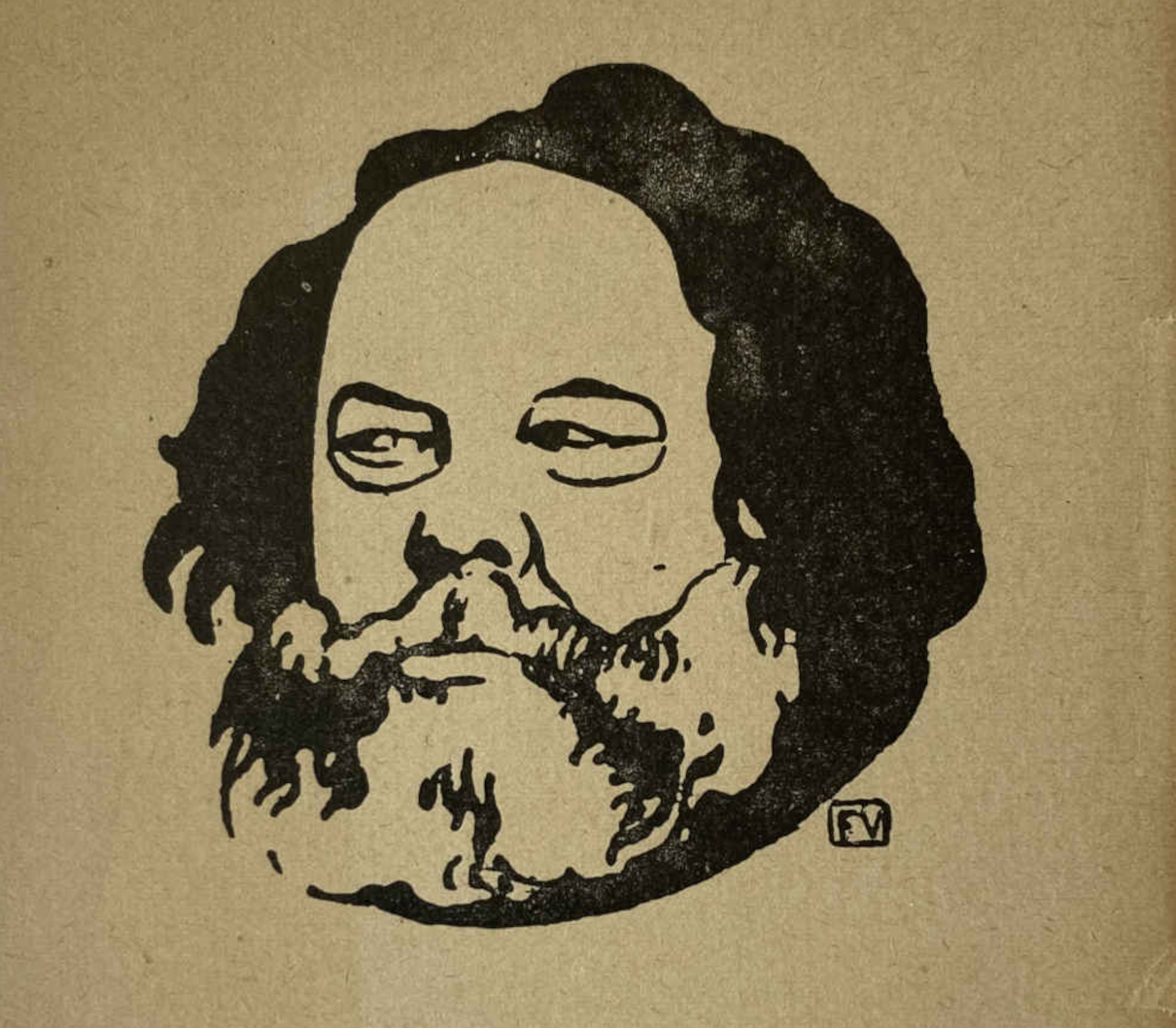
– he begins experimenting with different types of prints and decides in favour of woodcuts, which the journalist Octave Uzanne describes as ‘the renaissance of the woodcut’
1892
he becomes a member of the group “Les Nabis”, together with Pierre Bonnard, Ker-Xavier Roussel, Maurice Denis and Édouard Vuillard, where each cultivated his own style
between 1893 and 1897
Numerous commissions for his woodcuts for French magazines such as the literary-artistic magazine ‘La Revue Blanche’, but also international magazines. His woodcuts were also used for theatre programmes and book illustrations and had an important influence on artists such as Edvard Munch and Ernst Ludwig Kirchner.
|
1898
Félix Vallotton buys a Kodak No.2 ‘Bullet’ camera, which he uses to photograph interiors that serve as backgrounds for his paintings
1899
Marriage to Gabrielle Rodrigues-Hénriques, daughter of Alexandre Bernheim, art dealer and founder of the Galerie Bernheim-Jeune. The marriage brought him financial security and he gave up engraving to devote himself to painting.
1900
– Participation in exhibition of painters of the Vienna Secession
– Solo exhibition at the Bernheim family gallery
– The French government buys a work by him for the Musée du Luxembourg (then the leading museum of modern art in Paris)
1903-1907
Financial difficulties lead him to experiment with sculpture, he also continues to write art criticism and theatre plays
ab 1907
Félix Vallotton now had more success with the sale of his paintings
1915-16
as he was unable to take part in the First World War due to his age, he resumed his woodcut work
from 1919
F. Vallotton concentrates on landscapes and still lifes
1925
died in Neuilly-sur-Seine near Paris, France
|